
When I first heard about Face Pilates, I was instantly curious. At FLEETSTREET, we have tried every kind of Pilates under the sun. Mat, reformer, hot Pilates, even home micro reformer. But a Pilates-for-your-face session? That was new.
After years of taking reformer clases and knowing that Pilates targets the muscles directly, I’m hoping for some relief with my face. I have been living with jaw tension and temporomandibular joint (TMJ) discomfort for years. It was in a minor car accident in high school that left me with whiplash and a brief period of lockjaw. The tension never fully left. I grind my teeth. I get tension headaches. My mouth guard permanently lives on my nightstand. So, when I heard that Face Pilates might help loosen my masseter jaw muscles and improve circulation and lymphatic flow, I had to learn more.
While facial muscle work itself is not new, registered massage therapist Thom Tullo developed A structured approach, which he calls Face Pilates, at AMAN Spa in Toronto’s Financial District. I went to experience it firsthand.
How often should you get a facial? How many days before an event gets you that glow?—& other FAQs
What is Face Pilates?
Like Pilates for the body, it uses tension under extension to work the muscles. But it is not a cosmetic facial – at least the traditional sense. “People call it a facial, but it’s definitely a massage,” Tullo explains. “I created it to be a workout for your face.” Because it is performed by a registered massage therapist, it may be covered under personal insurance health benefits under massage.
The 75-minute treatment focuses on strengthening, stretching and rehabilitating face and neck muscles through manual manipulation. Nope, no reformer. Skincare products are used, but they’re meant to help with muscular work, similar to how oils are used in traditional massage.
f it sounds familiar, it may be because you’re thinking of FaceGym, which launched in London back in 2015 and now has 15 locations in England and in the States. But the main difference between the two, Tullo tells me, is that Face Pilates is grounded in massage therapy, not just aesthetics.
“We treat the face the same way we treat the body in strength training,” Tullo says. “By strengthening, stretching, and rehabilitating the muscles.”
It makes sense to me when. The face is constantly moving and expressing: clenching from stress, furrowing from confusion, smiling from laughter. I know I carry tension in my jaw without noticing. Over time, those movements do start to impact the face.
“While the cosmetic benefits are undeniable, the foundation of Face Pilates is functional wellness,” Tullo says. I left my workout glowing. My skin looked brighter, and my jaw felt more defined. But what struck me most was how much more relaxed my face felt.
Should you get a lymphatic drainage massage?
What happens during Face Pilates?
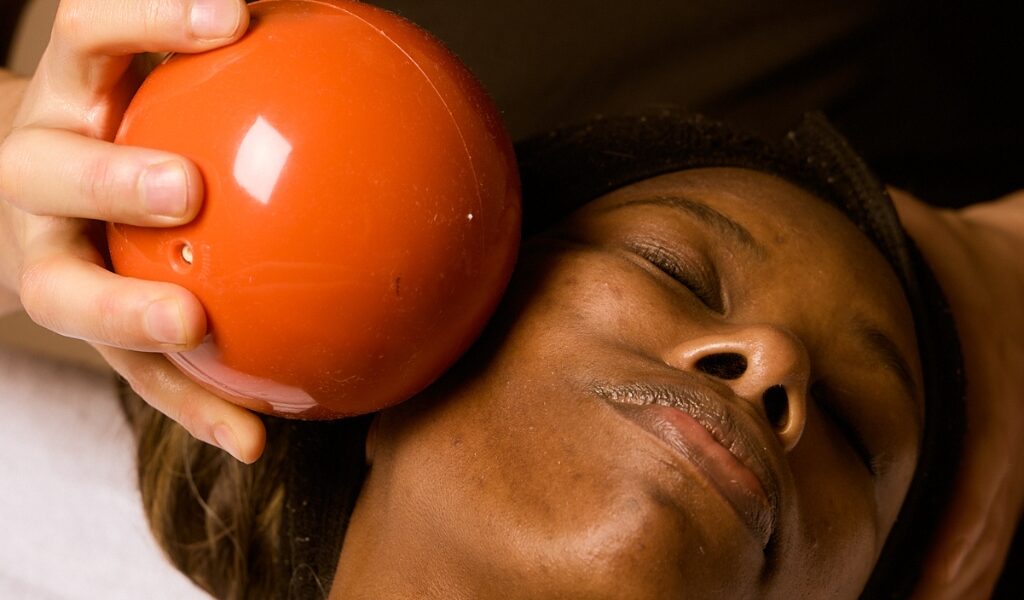
My session unfolded in stages, like a regular workout would, including a warmup, intensity and cool down. There are eight total steps or sets. It begins with fascia work, the connective tissue that wraps around your muscles. When this sheath around the muscles is tight, everything feels tense. Tullo used a small Pilates ball along my jawline, cheeks and temples. The bit of heat felt like warming up before exercise or like using a foam roller to gently wake up muscles.
Next: reflexology. Tullo uses targeted pressure to awaken tension points and regulate the nervous system. “Reflexology is used to awaken and stimulate points of tension in the face,” he explains. “It signals your nervous system that we are beginning work and [it] should exit [that] fight-or-flight mode.”
Then Tullo did lymphatic drainage on my face. Through sweeping movements, using the gua sha and facial cupping, he worked to move excess fluid and reduce puffiness away from my face. The cup suction was gentle and felt controlled. I was happy to see it didn’t leave any bruising or marks. I noticed almost immediately after I left that my jawline looked more defined and less puffy.
At one point, he used what he called a reflexology wand: a slim tool with a rounded metal tip. As he glided it across my forehead near my brows, I heard a faint crunching sound. That, he says, was the sound of scar tissue and adhesions being worked on. “It really starts the process in the workout, letting go and breaking up restrictions in the skin and muscles to allow better range of motion in the face.”
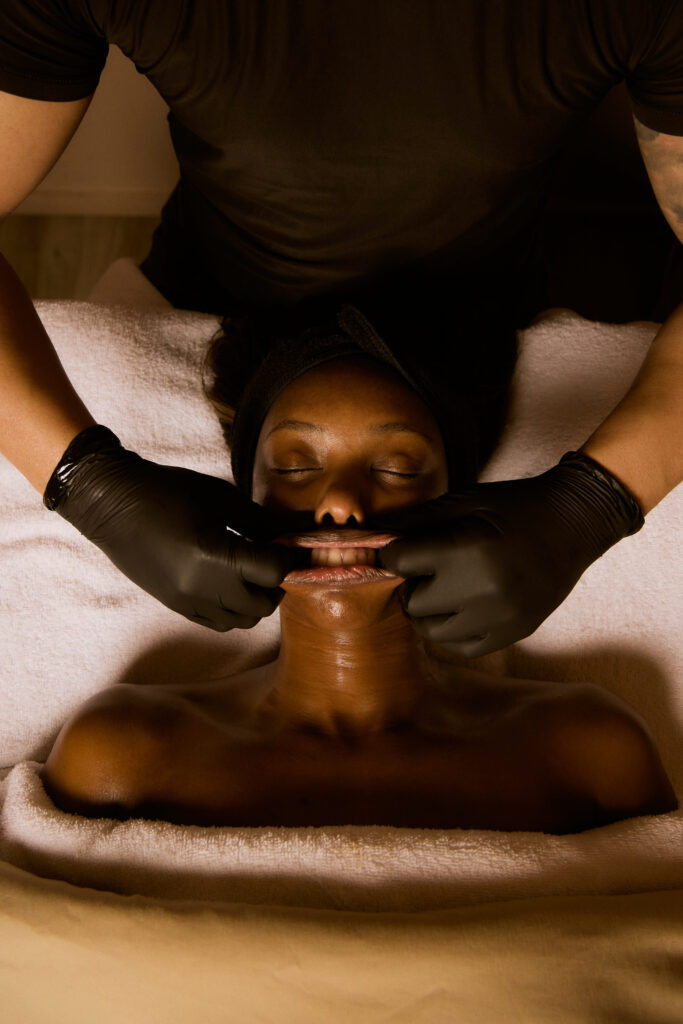
The most intense part for me was the intra-oral massage. With gloved hands, he worked directly inside my mouth on my masseter muscles while asking me to slowly open and close my jaw. I could hear clicking from my TMJ. It was not relaxing in the moment, and I could sense myself tensing up to guard myself from the discomfort. Once he was done, though, I felt some relief, and my body relaxed into the table again.
But, it does get a bit spicy again. Tullo then moves on to the electrical muscle stimulation part of the treatment. He warned me my face might twitch. It did. My cheek flickered, and my lip jumped. It felt ticklish and slightly magnetic, and I laughed because I didn’t expect my face to move on its own.
EMS treatment is often confused with microcurrent, but Tullo clarified the difference. “Both microcurrent and electrical muscle stimulation use electrical energy to stimulate facial muscles,” he explains. “But electrical muscle stimulation uses stronger pulses that visibly contract the muscles. Think of this as weight lifting.”
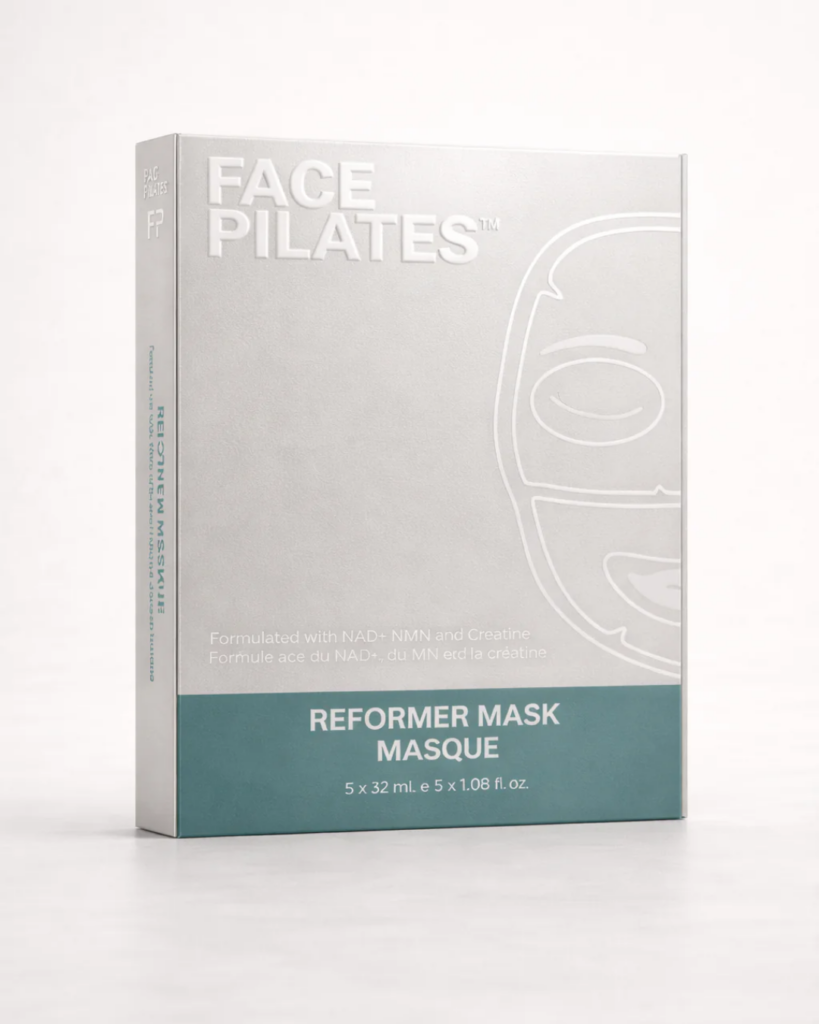
First, he applied a sheet masque that he developed himself, a biocellulose mask, designed to allow the electrical current to pass through evenly while delivering ingredients like nicotinamide adenine dinucleotide (NAD+), nicotinamide mononucleotide (NMN), and creatine to support cellular energy. Then he moved the small wand-like device with two metal prongs at the tip across my face. It pulses to cause muscle contractions. “Electrical muscle stimulation requires a conductive medium,” Tullo explains. “Without proper conductivity, the current won’t travel efficiently.”
From there, I had red light therapy. Tullo says this supports circulation. Then the Pilates cooldown with chilled cryo-globes. Once again, he glided them across my skin, making my face feel calm and settled.
“Cryotherapy is designed as the final step to calm the tissue after our workout and reduce inflammation,” Tullo says. It’s like how athletes sit in ice baths after a workout or competition to help with muscle and joint recovery.
From grip socks to glam: How to nail the Pilates princess aesthetic
What does Face Pilates feel like?
It doesn’t feel like any Pilates class I’ve taken, and I never broke a sweat. My muscles didn’t shake as they would in a plank. But it does feel controlled and intentional. The reflexology and lymphatic portions were grounding. The intra-oral massage was intense, but I could tell it was a ”good burn.” The electrical muscle stimulations were a bit awkward (like most Pilates movements, TBQH). The relaxation is the reward at the end of the workout.
My face was worked, not pampered. I left feeling like I did something productive for my facial muscles that wasn’t overly clinical.
Is reformer Pilates taking over the world, or just Toronto?
What are the benefits, and would I do it again?
For me, the benefits were my TMJ muscles. I suffer from regular tension headaches and can even feel the tightness from clenching when I massage my temples. My jaw felt loose for several days after.
Tullo tells me that people often seek treatment for chronic jaw tension, TMJ discomfort, puffiness, and stress. He sees relief from clenching, headaches and facial tightness as common. “Most clients see immediate visible changes after their first session,” Tullo says, including “reduced puffiness, improved contour, brighter skin and noticeable relaxation in the jaw and brow.”
That tracks. My jawline looked sculpted, and my skin was dewy from the hydrating sheet masque.
How often should we do Face Pilates? Tullo recommends monthly or weekly, depends on personal preference.
The cost is $249 for 75 minutes, and it is eligible for coverage under health insurance benefits under massage. If you’re not in Toronto, know that some registered massage therapists offer buccal massage or facial muscle therapy, but it’s just not called Face Pilates. Of course, there are self-massage tutorials online, too. But in my experience, it’s not the same as what I get from the hands of a professional.
Would I do it again? Yes. My jaw has not felt that relaxed in months. For someone who carries stress in her face, that alone made it worth it.