
This chair Pilates review is part of Class Action, FLEETSTREET’s workout review series. We get sweaty to give you the low-down on what the workouts are really like.
Follow FLEETSTREET on Instagram and TikTok.
Pilates is kinda cheeky, isn’t it? You lie down on a reformer through most of your workout, and you get to passively stretch your hammies and your calves with the always-rewarding “feet in straps” position at the end of a workout. And then there’s the leisurely named apparatus: Pilates chair. As any hundreds-loving Pilates die-hard worth the grip in her sticky socks knows, Pilates is not what it seems… Muscles will feel the burn, get the shakes and will scream the next day. And Chair Pilates is no different.
What’s face Pilates? Confessions from a Pilates diehard.
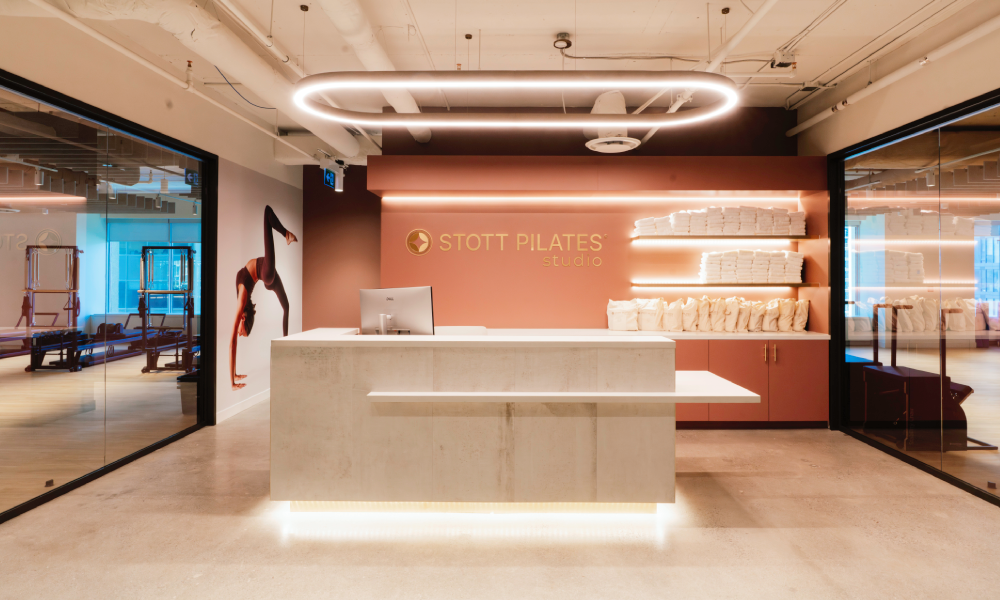
The Studio — Stott Pilates Studio
Merrithew is a long-time Canadian Pilates brand, which owns Stott Pilates. Ahead of its time, it launched with Pilates Princess-style in 1988. (Yes, back when scrunches and bike shorts first appeared on the streets.) Co-founder Moira Merrithew (née Stott) founded the brand as a studio after retiring from ballet due to injuries. And in 1991, the biz’s reformer and fitness equipment manufacturing arm began.
The company has since ballooned, which is why you might already recognize the Stott and Merrithew names as synonymous with Pilates studios around the world, from reformers to teacher training. The cool part: It’s still based in Toronto.
This studio, however, feels brand-spanking new. You’ll find it on the buzzy intersection of Yonge and Bloor streets, on the 10th floor of the ol’ Hudson Bay building, right across the hallway from the brand-new Merrithew Pilates Academy, where Pilates trainers learn and verify their instructor skills. It’s a posture and functional fitness studio that focusses on both fitness and health, with Merrithew-certified and master trainers.
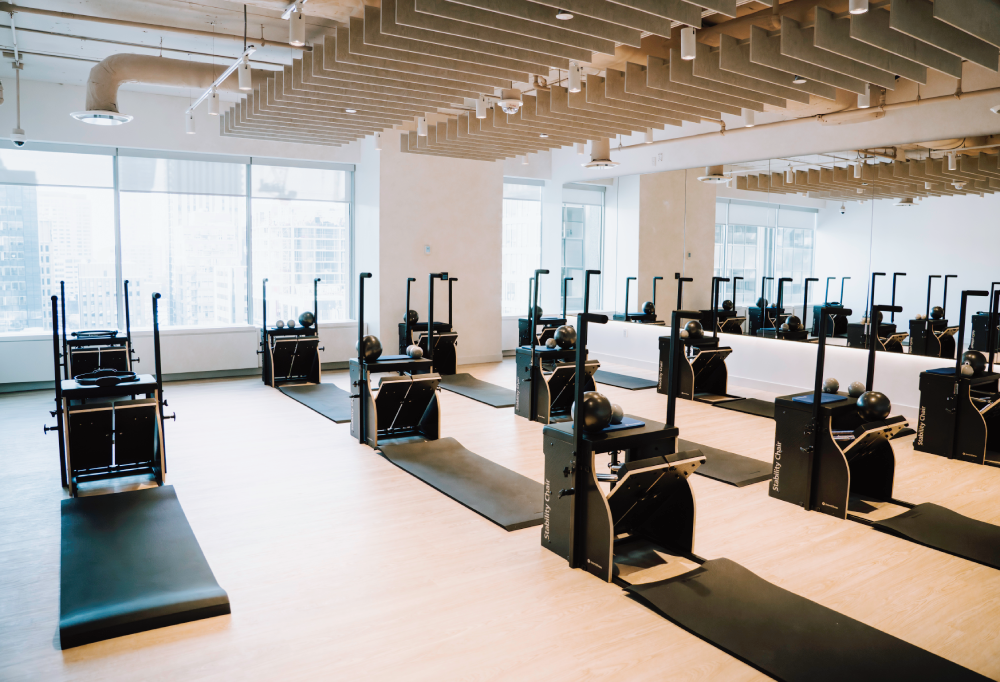
The Stott Pilates Studio is bright, with large windows overlooking Yonge Street. It has two workout rooms: a massive tower reformer studio (the reformers with the tall front frame) and a mat/barre/chair room.
There are two change rooms in the locker room with spacious, lockable cubbies for your stuff. Towel service is included. No showers onsite.
Classes offered include the following one-hour classes, unless stated otherwise:
- Reformer: Athletic Power (cardio and strength, using the rebounder), Strength Flow+ (calm and engaging strength training), Restore and Release (mobility and alignment focus), and Reset 45 (a fusion of Athletic Power and Strength Flow+ for 45 minutes)
- Mat: Strength Flow (contemporary Pilates), Power Flow (Intense strength sequences), Restore and Renew (balance and mobility work), and Reset 45 (45-minute blended Strength Flow and Power Flow class)
- Chair: Chair Flow (mat and chair movements for balance, mobility and strength), which is the class I took.
The best barre and yoga classes in Paris for la bonne forme.
Lagree Micro Review: Don’t expect an at-home Pilates workout.
The Workout – What is Chair Pilates?
I have seen “the chair” in very boutique-y Pilates studios. Tucked into a corner for private sessions while the reformer takes centre stage with classes, this Merrithew pedal apparatus looks harmless enough. Much like a padded wooden box with handlebars and two pedals on one end. But look closer, and you’ll see the guts: four springs (two blue and two red, in case you were wondering) and two spine-like anchors to connect the springs. This is why it’s called a Pilates chair, but why is it called a “chair.”
But a deep dive into the history of the Pilates chair reveals that it was Pilates creator Joseph Pilates named and created the Wunda Chair, the OG chair in 1931. It was meant to be functional as a home gym and a chair.
Here’s the class description from the Stott Pilates Studio site:
“This mixed-equipment class brings the Split-Pedal Stability Chair together with complementary props and tools for a dynamic, full-body experience. Flow through sequences that improve balance, coordination, and strength through controlled, multi-directional movement. Find thoughtful progressions, energized movement, and a grounded feeling of doing something good for your body.”
When I took this class, we did both mat work (think: crunches, bridges, and, thank the heavens, foam rolling) and chair work (standing crunches by holding the chair and letting the pedals push the feet in the air as you tighten your midsection to make feet weightless, thread-the-needles, plank with single arm-bends and mermaid).
How to nail the Pilates Princess aesthetic.
We Tried It – Chair Flow
I sat myself down on the cushiest mat ever. It’s like 1/20th of a mattress, I thought to myself. I’m framed by the equipment I’ll need for class. The foam roller initially scared me. How tight will I instantly become?! The stability cushion works like a half-inflated seating pad. I also have two weighted balls and a foam cushion.
There’s no music. There’s a bit of demonstration, but mostly oral instruction, which isn’t atypical for a Pilates class, to be honest.
It was easy to follow. The moves were challenging but easy enough to wrap the mind around – and ultimately the body.
Using a chair might seem intimidating, but it’s not as complex as you might think. If you know how to change the springs on a reformer, you’re 80 per cent of the way there. The paddles are new information, though. But a good instructor, like Alice Heeyeon Han who taught the class I took, will walk you through everything, from how to position yourself to how the move should feel.
The cool thing with the Stott Pilates Studio, though, is that when you pay for unlimited classes, you get access to mat, chair, and reformer classes. Truly unlimited classes! Other studios typically charge more for reformer memberships.
The besties behind Fortides: The Roncey Pilates studio you need to try.
The Verdict
While it’s no feet-in-straps, Chair Pilates was fun. It was good to move my body in a different way while still getting that familiar pull-push feeling from Pilates classes. I could see this going a few ways: You want to level up from mat Pilates, or you’ve “been there and done that” with reformer and want to try something new. If you’ve never tried Pilates before, I’d recommend a mat class so you can familiarize yourself with the sensation and recognize good form before you try equipment. But a chair class is a good move before a reformer class.
And if you’re a religious reformer rat and want to try something new but similar (I get this feeling), then chair might also be for you.
Also, there was a wide range of people in the class I took, from someone who clearly lives the Pilates Princess life to beginners and even a guy (men are catching on). The class was small, about seven people, so it was fitting for all levels.
However, if you’re looking for a class to release the frustrations of work or life, or want to punch something, it might be too chill for you. And to the other extreme, if you’re hoping to sit on a chair, you might want to sit this out.
Stott Pilates Studio, 2 Bloor Street East, 10th floor, $45 for drop-in class, packages range from $99 to $430.