
When you’re an athlete, there’s an understanding of what takes you from injury to the field. But not for us regular folk, even if you’re active. There’s a gap between getting discharged from health care providers and working out like you used to do after an injury. After a long bout of dealing with a shoulder injury that led to frozen shoulder, I was ecstatic when my physiotherapist (who advocated for me with my doctor) said I no longer needed her – and that I could work out like I used to.
I knew, based on my range of movement, that I couldn’t lean on the handlebars of my spin bike, do overhead presses for one set, let alone three EMOMs (exercise reps done every minute, on the minute), or add a push-up to my plank like I was doing before my injury. So working out was hard physically and emotionally.
I was told I was “lucky”; not everyone gets their mobility back like I did. And when given a push out the door like on the first day of school, I was very excited – until I wasn’t. The reality of post-injury life set in.
Working out with an injury blows, but these expert tips make it suck less.
Muscle compensation and imbalances after injury
The way my body worked was different now. My muscles compensated for other muscles; some tightened up so badly that even the unreasonable tension was a head scratcher for my massage therapist. I wanted to do walking lunges, yet I couldn’t even do a low lunge because my hip was off-balance on the same side as my shoulder. That killed me emotionally.
I was seeing an osteopath to help me work through the physical imbalances. But releasing those imbalances just made other muscles angry, namely the ones around my neck, down to my calves.
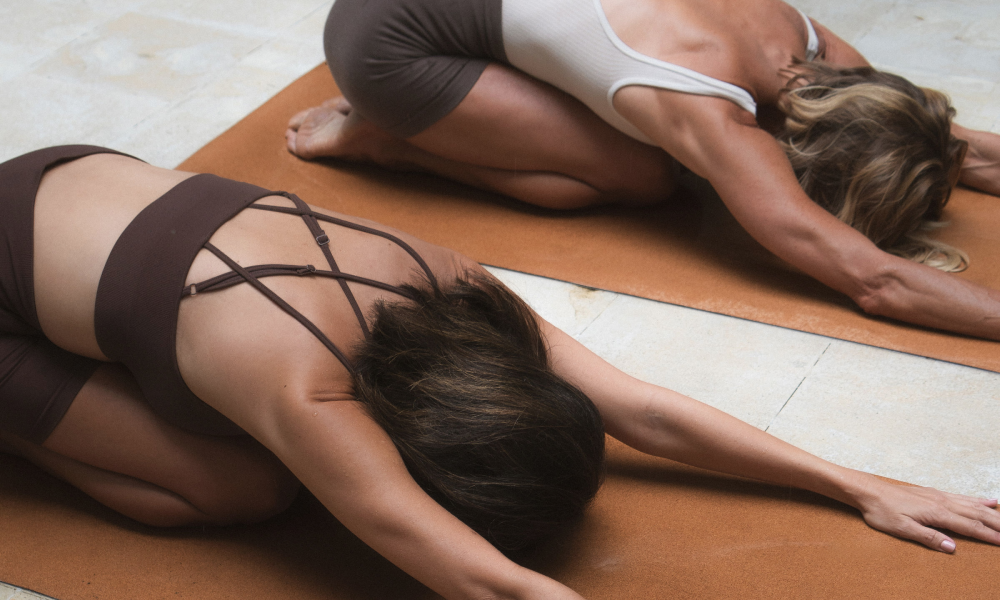
How could I be ready to crush a workout when I couldn’t even do child’s pose without my shoulder getting pinched?
When I went back to physio, she told me my glutes were weak. “It has nothing to do with my shoulder?” Nope. I sat in the room, grasping for reason and logic. The only thing I could do was squats. And I was doing those every single day to help myself feel somewhat normal.
But without the context of my shoulder (Hello! Same side!), the diagnosis just felt like another punishing injury. I was gutted, again.
Hands down, the easiest fix – how I stopped wrist pain during exercise.
The mind-body connection after injury
My next plan of attack was to see someone who could do active release therapy (ART) and break up any leftover adhesions from my shoulder injury. If I learned anything from my osteopath, it’s that everything’s connected. If I could push past the residual shoulder stuff, then maybe I would feel normal again.
While not certified in ART, I saw a physical therapist who specialized in adhesions. He warned me that I would be bruised from the treatments. And I did see improvement, but he too said that was all he could do for me. And I was released again.
I was left with the thoughts: “Am I obsessive?” “Is the health issue travelling to my brain.”
So, instead of focusing on the shoulder condition, I went to an ART-certified chiropractor with two issues: I can’t do lunges because of my hips, and I can’t do child’s pose because of my shoulder. These two things gave us both goals, instead of telling me I was “lucky” or that they were “impressed by any shoulder movement.” It also meant, I had to down play the frozen shoulder.
This active-release therapist worked on the adhesions and gave me exercises after exercises. Soon, my treatment replaced my workouts. I had 45 minutes of movements to do daily!
My workouts didn’t just get pushed to the side; they were pushed off the boat via the plank – literally. I did feel stronger, but once I stopped doing these prescribed movements and hit up a bike, the imbalances would snap right back and the same for my shoulder twinges.
It didn’t feel like progression. It seemed like a workout waiting room, and I’d never get called to enter. Sensing my frustration, she told me to use the exercises like a first-aid kit; pull them out when I need them. And, I got released again.
Chi Junky review: Where every teeny muscle feels seen.
Transitioning to anatomy-informed yoga and mobility
Bored and needing something that felt like a fitness class and challenged me, I tried yoga. It was the one thing that truly worked for me. I saw changes in my mobility and balance. Suddenly, I could do other fitness classes, too.
I also discovered the shoulder-injury series on Peloton: Road to Recovery Shoulder. And while the movements felt “easier” than the long list of prescriptive exercises from my physiotherapist, active-release therapist and osteopath, the key difference for me was the messaging. Peloton trainer Adrian Williams reminded me during the workouts that I have to be reasonable about what I expect from my body, especially regarding range of motion and scapula activation. Something that was missing from my discharge notes.
He mentioned things like “support” and “feeling comfortable”. “You get impatient, and you want to get back to the things you did before, but I want you to take your time. That’s the important thing.”
That contrasted what I heard from others, like “you have a desk job” and “you’re lucky, most people don’t get back this much range of motion.”
While I am not negating those facts, those statements just felt absolute (What am I supposed to do, find a job as a mailperson? Even they don’t walk!) and were filled with blame (as if I were part of the problem). While both comments were fair, but they didn’t show me a way out of the current pain. It was more defeatist than motivating. But seeing athletes like Lindsay Vonn, Simone Biles and Tessa Virtue go in and out of injury, I felt pushed down by my support. I’m not trying to compete in the Olympics, but I want to be able to do compound movements without feeling like I’m going to fall over.
And I did.
“The hardest thing I’ve ever done.”
Bridging the care gap with functional movement with yoga
When I stop doing yoga and foam rolling, my body shifts back to its post-injury weirdness, with muscles tightening and compensating. While I am still mad as hell that there is a medical gap between what requires treatment and what I’m left to figure out for my body feels like I’m swimming blindfolded through sand. Ultimately, I ended up on the reformer and on a yoga mat.
I spoke with Brea Johnson of Heart + Bones Yoga, whose focus is on an anatomy-informed approach. “I know a lot of doctors say, ‘go do yoga.’ That’s such a broad statement,” adding that people will go too intense for recovery with challenging classes like Bikram or Vinyasa.
Lucky for me, the beginner online classes started with 15 minutes a day and were more about range of motion and movement. And I would just pause on any poses and flows that rocked my balance, because of my well-off-balance body.
“It’s all connected,” she tells me. “Of course, the whole body is, but especially in the shoulder. The blades alone 17 muscles attached to them, and some of those are connected to the spine and the neck. … Building a stronger posterior chain can help.”
Johnson recommended that I focus “on mobility over passive stretches to help keep the joints healthier.” And to think of my yoga workouts as “fun habit of an easy routine.”
Peloton Yoga review: It’s got every type of class under the sun salutation.
Think like an athlete
This mantra has kept me moving through my recovery. While my job doesn’t require me to return to my pre-injury level, my lifestyle does. So, each time a care provider suggested I was “good enough” or “too needy” (my interpretation, not their words, but that’s how it felt), I would imagine them telling Vonn, Biles, or Virtue that they were released in my state.
Nope. Not gonna happen.
The best barre and yoga classes in Paris for ”la bonne forme.”

Workouts that incorporate anatomy and mobility, with yoga
Here are the yoga workouts from Heart + Bones that pushed me forward with an athlete’s mindset.
Fascia and Flow: Good Vibrations
It’s all about the vibe. This session includes shaking, sound and movements to release tension in “stuck” parts of the body. It focuses on the fascial and nervous systems to create calmness.
Shoulder Mobility & Upper Back Strength
This is a sneaky, snaky way to mobilize the shoulders and strengthen the upper back using the cobra pose. You use breath with movements for an awareness of how the shoulder really moves.
Quick-ish Core
The core is the centre of the body, and this short, prop-free session focuses on aligning the pelvis for the midsection workout.
Help for the Hamstrings
What do hamstrings have to do with shoulders? No idea, but mine are tight. But this strap-and-pillow workout helped me look at the connection of the entire body through the legs.
Neck Reset
Learn three dead-simple tricks for releasing neck tension and proper spinal alignment.
Quick Neck and Shoulder Tension Release
Relax tight neck and shoulder muscles with active stretches that strengthen, too.